

An American LLC vs a UK Limited Company

On this page
- For non Americans, the US LLC has long been the entity of choice – https://htj.tax/2019/12/forming-llc-is-not-that-simple/
- But now privacy is no longer assured thanks to the CTA – https://htj.tax/2024/01/corporate-transparency-act-beneficial-ownership-information-reporting-requirement/
- In addition, the US has made it clear that using US bank and / or structures to facilitate activity which may run afoul of laws in other countries may be prosecutable in the US – https://htj.tax/2024/10/are-us-asset-protection-and-estate-planning-structures-right-for-non-resident-aliens/
- Plus structures with no obvious US connections are facing a nightmare in getting US bank accounts – https://bsaaml.ffiec.gov/manual/RisksAssociatedWithMoneyLaunderingAndTerroristFinancing/19
Yes there are many third world jurisdictions to explore for entity formation. But we believe that onshore is the new offshore. The world is turning against the old emerging market structures. The stats prove it. The number of entities formed there is falling. The first world is where it is at.
So with this in mind, what about the UK in general? England and Wales in particular. Yes you can form a UK entity easily but UK banking is problematic if there is no UK connection. If you need the entity to hold foreign assets then banking is not an urgent need. Otherwise, you can bank where you reside as foreign banks tend to be comfortable with UK entities as opposed to typical third world entities.
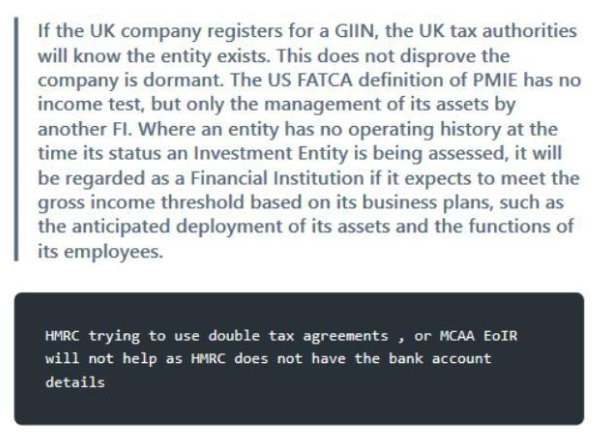
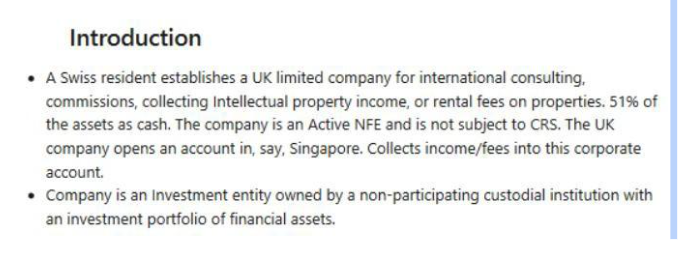
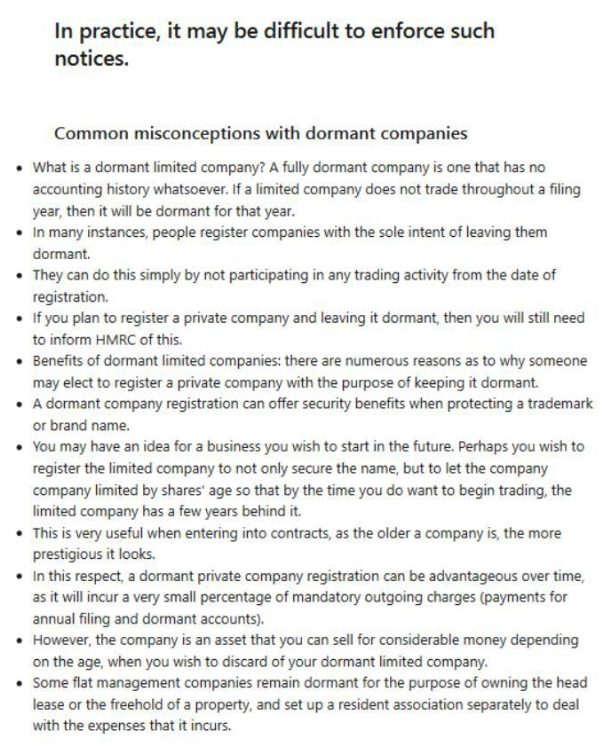
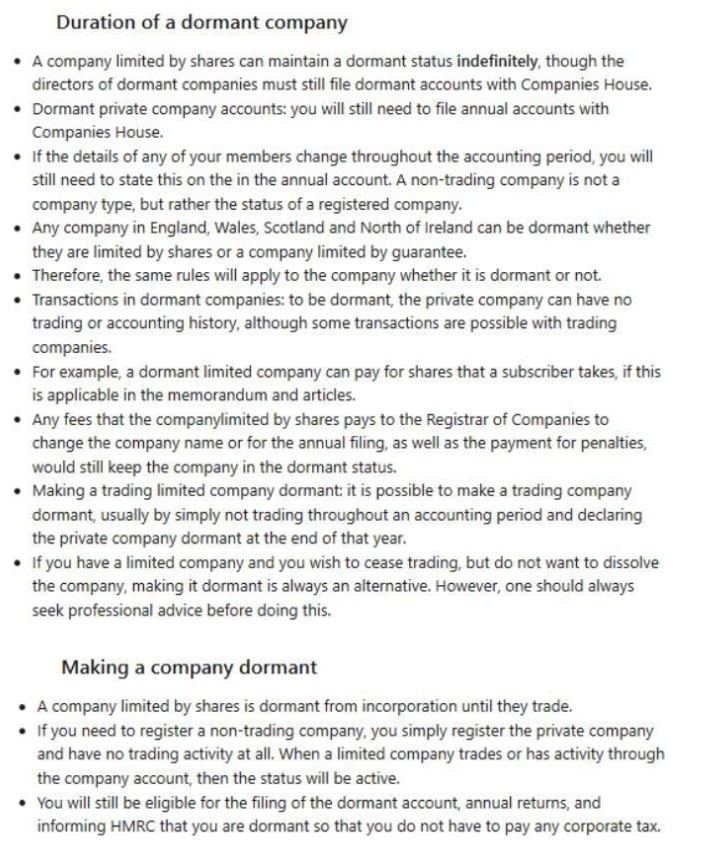
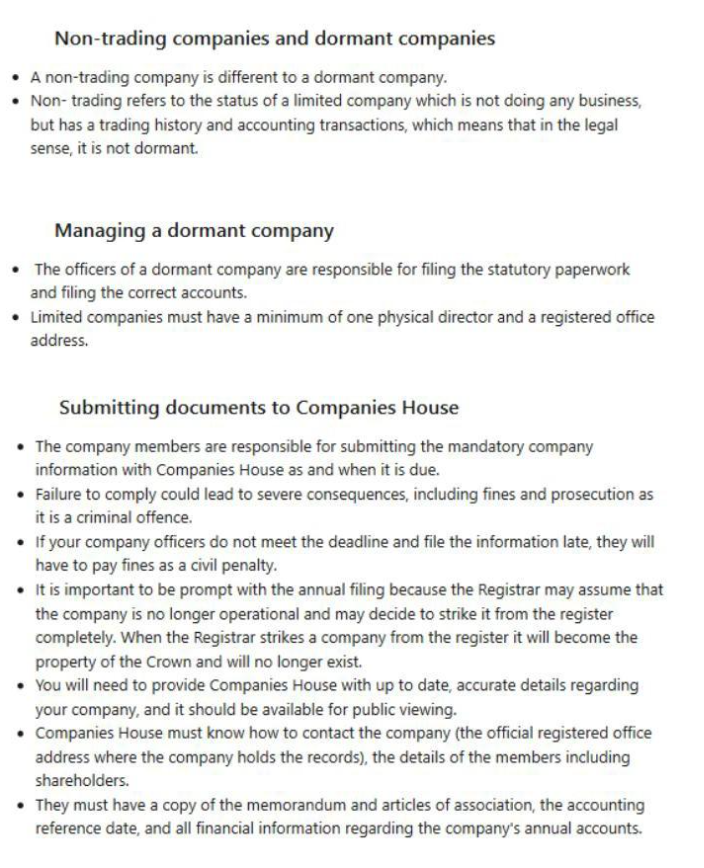
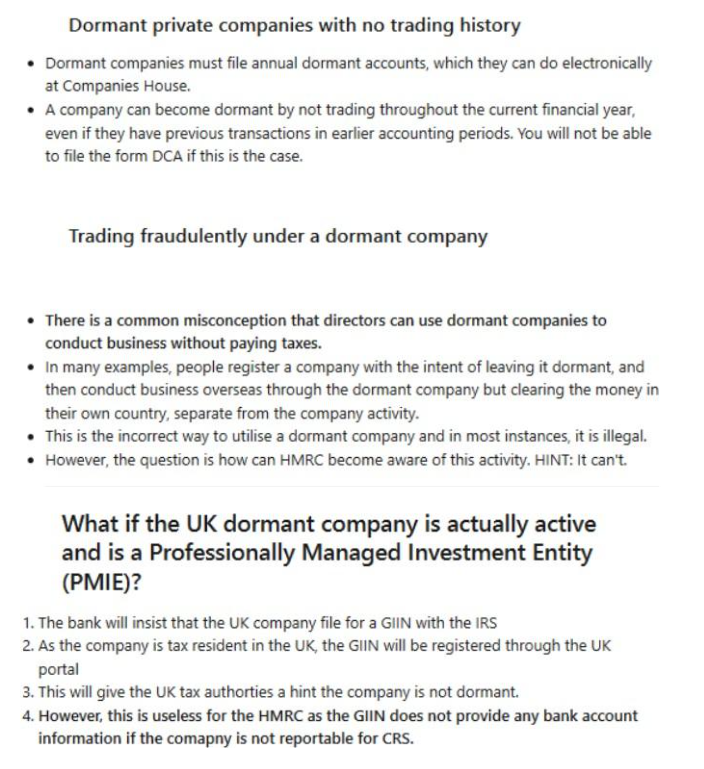
Some even go further and bank overseas and file the UK entity as dormant. The dormant status is not shown on the company certificate so it is commonly done but is it correct?
I don’t think I need to say that the answer is “no” but I’m often asked what can the HMRC do about it?
The surprising answer is…..nothing.
To understand this, we need to look at Jimenez vs the First-tier Tribunal Tax Chamber as explained below but again, I do not advocate any misrepresentation of the facts to the UK. I’m only pointing out that that the law does not give the UK any power to take action against non-UK residents who do so misrepresent the activity of their UK entity. My position is that if the entity is not engaged in trading but still holds foreign assets? Let the balance sheet properly reflect the value of any such foreign assets.
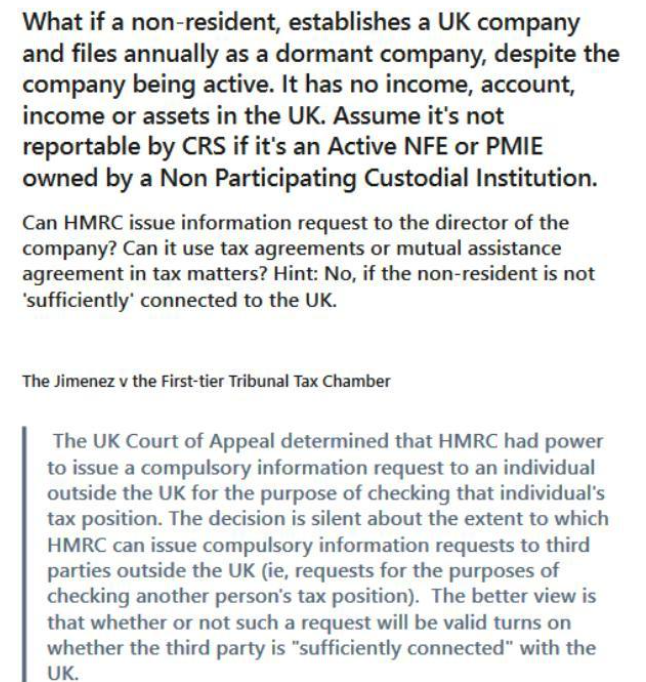
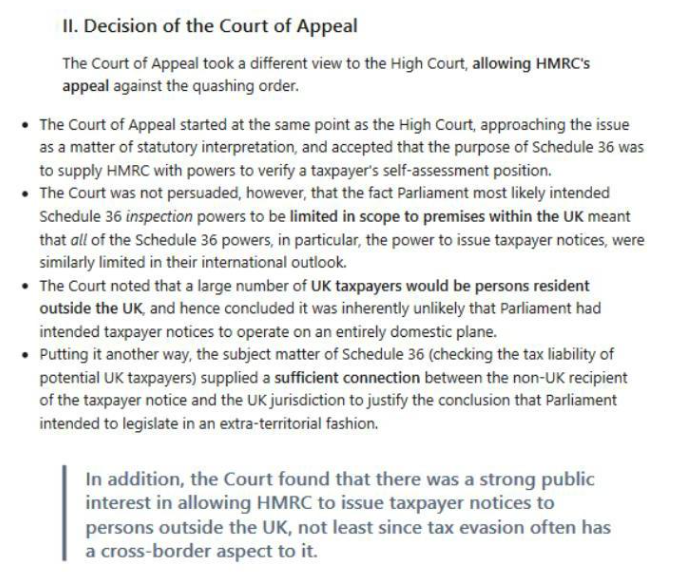
In Jimenez v the First–tier Tribunal Tax Chamber and HMRC, the Court of Appeal determined that HMRC had the power to issue a compulsory information request to an individual outside the UK for the purpose of checking that individual’s tax position.
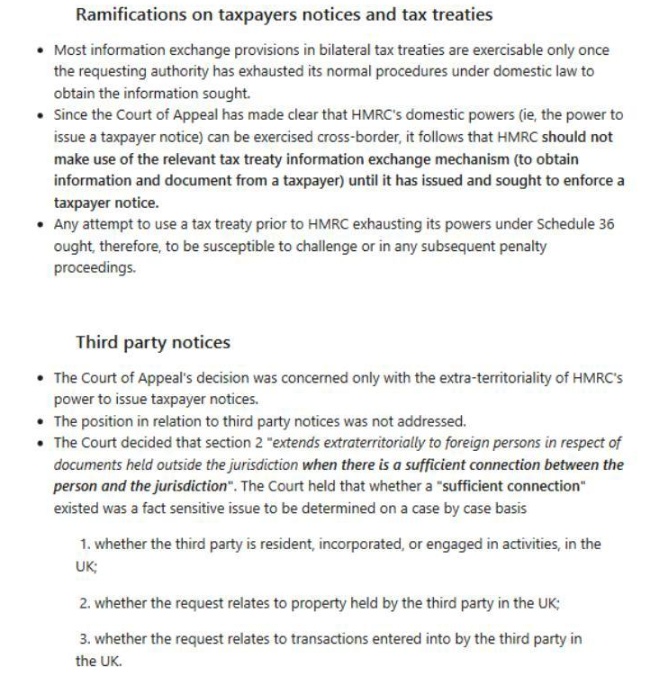
- The decision is silent about the extent to which HMRC can issue compulsory information requests to third parties outside the UK (i.e.. requests for the purposes of checking another person‘s tax position). The better view is that whether or not such a request will be valid turns on whether the third party is “sufficiently connected” with the UK {see below).
- The Court of Appeal did not comment on the First tier Tribunal’s practice of approving information requests in the relevant taxpayer’s absence {i.e., at an “ex parte· hearing). At first instance, the High Court had been critical of this practice, encouraging HMRC and the First–tier tribunal to rethink their approach. That call for reflection now seems less likely to be heeded.
HMRC’s compulsory information powers
HMRC has an impressive collection of powers available to it in support of civil investigations. As regards its powers to compel the production of documents and information, Schedule 36.Finance Act 2008 confers on HMRC power to compel production from a person:
- for the purposes of checking that person’s tax position: and
- for the purposes of checking another person‘s tax position.
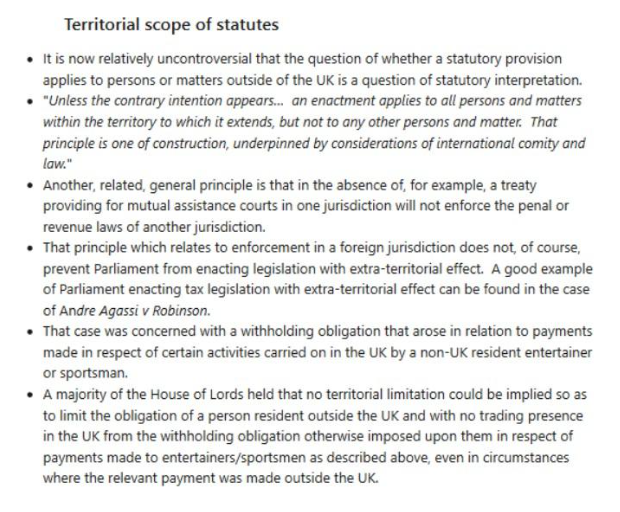
Schedule 36 is silent about the territorial scope of those powers. In particular. it says nothing about whether the intended recipient of the notice must be present within the UK, or resident within the UIIK, or the power to be operable.
It is of course the case, however, that a person can be a UK taxpayer without ever having set foot within the UK. This has been highlighted most recent1ly by the imposition of a charge to capital gains tax on non-residents in respect of disposal of UK real estate.
As such, and although HMRC can ask the authorities in many foreign jurisdictions to obtain and transmit documents and information from persons within that foreign jurisdiction pursuant to various bilateral and multilateral treaties, it is conceivable that HMRC would want to issue a taxpayer or third party notice to a person outside the UK.
Decision of the High Court on Jimenez (which was subsequently reversed by Court of Appeal)
In Jimenez, First–tier Tribunal’s approved the issue o a taxpayer notice to Mr Jimenez.
The Notice had been sought by HMRC in support of a civil investigation into the residence status of Mr. Jimenez in prior tax years.
The taxpayer, Mr Jimenez was a UK national who was living in Dubai. He had been a UK taxpayer in previous years and there existed a dispute between him and HMRC as to the period of his UK residency.
As part of HMRCs investigations into his tax returns, HMRC issued a notice under Schedule 36 requiring the taxpayer in Dubai to provide them with certain financial information and a schedule of his visits to the UK.
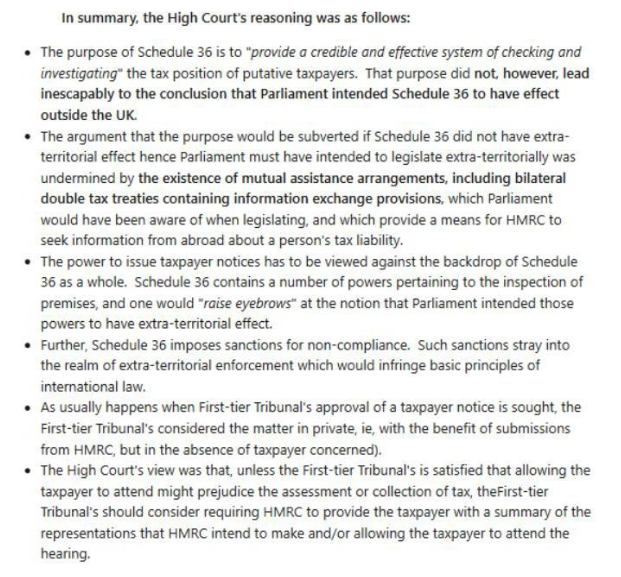
The taxpayer contended that the issue of such a notice to him outside the UK was either contrary to the legislation or otherwise contrary to international law.
In particular, the taxpayer argued that the provisions of Schedule 36 “must be construed by reference to international law and in conformity with a presumption that Parliament would not have chosen to confer powers on H MRC which could be exercised in breach of international law-.
That included not conferring a power on HMRC which might result “in the UK exercising an enforcement jurisdiction within the territory of another sovereign state”.
At first instance the High Court held, in essence, that Schedule 36 does not have extra–territorial effects on that basis, the, High Court found that the decision to approve and assist ie the Notice to Mr Jimenez in Dubai were unlawful, and the High Court made a “quashing order·.
Summary
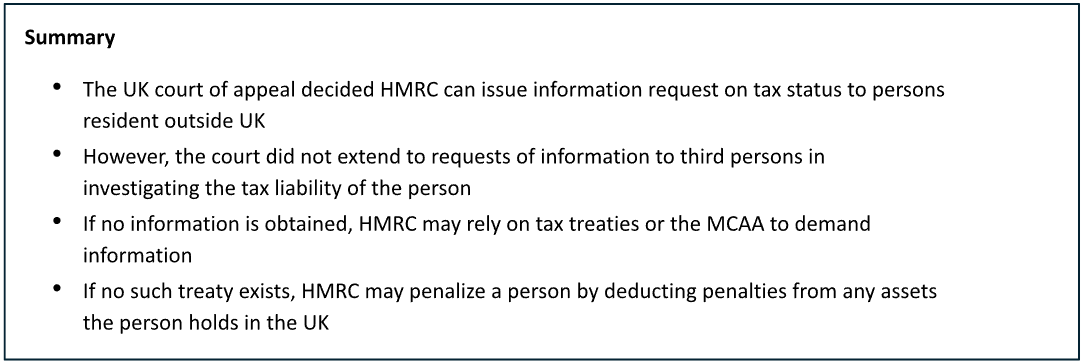
- The UK court of appeal decided HMRC can issue information request on tax status to persons resident outside UK
- However, the court did not extend to requests of information to third persons in investigating the tax liability of the person
- If no information is obtained, HMRC may rely on tax treaties or the MCAA to demand information
- If no such treaty exists, HMRC may penalize person by deducting penalties from any assets the person holds in the UK
MADAGASCAR RESIDENCY: OUR 5 – YEAR RESIDENCY PACKAGE – ULTIMATE PLAN B FOR PERSONAL SAFETY, PRIVACY AND WEALTH PRESERVATION
Read article
Lionheart, Military and Cyprus SBA Trusts
Read article
Kenya Residency: Your “Plan B” Guide to Class K and N Visas
Read articleLooking for an international tax service?
We’re always here to help. Don’t hesitate to get in touch.
Talk to an expert